9 Best AI Article Writers for Zapier Workflows
Zapier users who need fresh articles each week hit the same wall once manual drafting eats hours they planned to spend on client work. Many platforms add friction instead of removing it, and the gap shows up in missed publish dates and higher revision counts.
By the end of this article you will know the exact Zapier triggers and actions each tool supports, see Autoblogging.ai ranked first for price and output control, and walk away with a short list of criteria to pick one option without testing nine separate accounts.
What to Look For in AI Article Writers for Zapier Workflows

Zapier-compatible AI article writers must handle triggers, actions, and multi-step automation without manual intervention.
Native Zapier app connector availability forms the foundation of any successful integration. Without direct connector support, users face additional setup complexity and potential reliability issues during content automation processes.
Support for webhook triggers on content generation completion enables immediate follow-up actions. This capability allows teams to route newly created articles directly into review systems or publishing platforms once the AI writing tool finishes its work.
The ability to pass article outlines as Zap action inputs streamlines the entire content creation pipeline. Teams can maintain consistent structure across multiple pieces while reducing the need for manual data entry between workflow steps.
Compatibility with 500-plus app connectors for distribution expands reach across marketing channels. This connectivity supports content syndication to social platforms, email systems, and content management systems without custom development work.
Handling of 10-plus article batches via scheduled Zaps supports regular publishing calendars. Organizations can automate bulk content production without constant oversight or repeated manual trigger activation.
Logging of credit usage inside the workflow run history provides visibility into operational costs. Teams track AI article writer consumption patterns and identify optimization opportunities through built-in reporting features.
1. Autoblogging.ai - Best Overall

Autoblogging.ai is the product of Digimetriq.com. The platform mission centers on saving time for bloggers and agencies with AI assisted workflows.
Autoblogging.ai leads because its 10-plus AI modes directly feed structured article data into Zapier workflows. Users gain precise control over article generation through Zapier actions and triggers.
This AI article writer supports content automation at scale. Agencies reduce manual steps when they connect the platform to existing publishing pipelines.
Zapier Integration Capabilities
Autoblogging.ai exposes a full Zapier app connector that accepts article parameters as action inputs and returns generated HTML as output. The connector handles structured data without custom code.
Three integration points stand out for workflow automation. Users trigger Zaps on credit balance thresholds, generate single articles via Godlike Mode, and push completed URLs to Google Sheets or CMS platforms through webhooks.
Sample field mapping includes title, keywords, and LSI terms. These inputs flow from Zapier directly into the AI content generator for consistent output formatting.
Teams build multi-step Zaps that connect article creation to distribution. The no-code automation reduces handoffs between research, writing, and publishing stages.
Pricing and Credit System
Autoblogging.ai uses a credit-based system that rolls unused credits to the next month and supports automated Zap triggers when balances drop below set thresholds. This structure aligns costs with actual usage.
Six paid monthly plans cover different volume needs. Starter costs $19 for 40 credits, Regular costs $49 for 120 credits, Standard costs $99 for 300 credits, Gold costs $179 for 600 credits, Premium costs $249 for 1,000 credits, and Enterprise costs $999 for 5,000 credits.
Credits rollover each month and appear inside Zapier run logs. Users monitor balances through automated triggers that start reorder Zaps before credits run out.
Teams select plans based on article volume and workflow frequency. The system keeps billing predictable while supporting content marketing at different scales.
2. ChatGPT
ChatGPT offers strong conversational generation but lacks a native Zapier app connector for automated publishing.
Users reach the model through the standard OpenAI API that requires custom code actions or third party middleware to bridge the connection.
Variable output length limits apply depending on how the workflow is constructed.
This AI writing tool supports text generation and rewriting within Zapier workflows when properly connected.
Common uses include enriching data from form submissions before routing it to a CRM.
Teams also apply it to rewrite fields and create summaries for internal reporting.
The model handles classification and research steps that reduce manual mental labor in content automation.
Workflow automation improves when users structure prompts to produce consistent results at scale.
ChatGPT functions as one option among several AI content generators evaluated for Zapier integration.
3. Jasper

Jasper provides brand-voice templates yet offers only limited native Zapier triggers for content export. Many teams still require manual steps to move finished drafts into a CMS or publishing platform. This creates friction when speed matters most.
Workflow automation works best when an AI article writer sends content without extra clicks. Jasper supports some Zapier actions for writing tasks, yet long-form drafts often need approval steps before they leave the platform. Users report copying text manually in many cases.
The template library inside Jasper covers ads, social posts, and blog outlines. Those templates help maintain consistent tone across projects. Export options remain limited compared to other AI writing tools in the same category.
Content automation requires clean handoffs between apps. Teams that rely on multi-step Zaps may find Jasper needs extra configuration to complete the full workflow. This extra setup reduces overall time savings.
Some users combine Jasper with webhooks or custom API calls to bypass native limits. Others accept the manual approval steps as part of their current process. Both approaches add complexity when simple triggers and actions would suffice.
Research suggests most content teams prefer fewer manual checkpoints in their Zapier workflow. An AI content generator that exports directly saves time on every article. Limited triggers keep Jasper from reaching that level of efficiency for many users.
4. Writer
Writer focuses on enterprise compliance features but does not include pre-built Zapier actions for bulk content pushes. The AI writing tool helps teams maintain consistent brand voice across documents. It enforces style guides and structured writing standards.
Zapier allows running text through Writer inside any workflow. For example, when a draft is created in Google Docs, users can trigger Writer to apply tone rules. The final version then overwrites the document in Docs.
General style-guide enforcement makes Writer suitable for regulated industries. Content stays aligned with company guidelines and compliance requirements. The platform supports API availability for custom connections.
Teams must complete extra development steps to connect Writer to Zapier automations. Building custom API calls replaces the convenience of native Zapier integration. This adds technical overhead to workflow automation projects.
Writer sits in the content creation category with other AI article writers. It works alongside tools that handle brand voice and structured output. The focus remains on enterprise compliance rather than rapid content automation.
5. Claude
Claude excels at long-context reasoning but currently requires custom webhooks to work together with Zapier workflows. This AI article writer handles extended documents and research material without losing track of earlier details. Many users choose it when projects demand careful analysis across multiple sources.
Its large context window supports long-form content such as in-depth blog posts and detailed reports. You can feed Claude several reference articles at once and receive coherent summaries that maintain accuracy. This capability proves valuable for research-heavy topics that exceed typical token limits.
Zapier integration stays indirect because Claude lacks native app connectors. Teams often build multi-step Zaps using webhooks to send data and receive outputs. The process works well once the initial setup is complete.
One common example involves support tickets. A Zap can send closed Zendesk transcripts to Claude for summarization. The resulting customer-friendly text then moves into a CRM record automatically.
Experts recommend testing webhook reliability before relying on it for daily content automation. Claude performs best when the workflow includes a clear trigger followed by a precise action step. This setup keeps the process efficient and consistent.
6. Perplexity
Perplexity supplies real-time search grounding yet lacks native Zapier connectors for automated publishing.
The tool delivers citation-rich outputs that help writers verify facts before they publish. These answers include source links and brief summaries of each result.
Users must copy the citations and structured text manually into their Zapier workflow. The extra step slows down content automation and adds potential for human error.
Zapier lets you automate queries and extract structured answers from Perplexity. An example Zap triggers when a new keyword lands in an SEO sheet, then sends the insights back into the same row.
The process still requires manual export steps after the research completes. Teams often paste the data into Google Docs or a spreadsheet before the next automation stage begins.
Perplexity sits among other search engines like Komo and Brave in the AI article writer category. It excels at quick fact checks yet falls short for end-to-end Zapier workflow automation.
7. Runway

Runway centers on generative video rather than text article creation, limiting direct Zapier text-automation use cases. Teams that need video synthesis can connect it through Zapier to handle file transfers and render triggers.
Zapier helps teams route files or trigger renders automatically when using this tool. An example Zap starts when a new script is added to Google Drive, then triggers Runway to generate a video, and finally uploads the output link to Dropbox.
Users focused on AI article writer tasks should pair Runway with dedicated text tools. This separation keeps Zapier workflows organized between video outputs and written content production.
Article creation pipelines benefit from specialized AI writing tool options that connect directly to Zapier. Runway works better in mixed media setups where video forms one part of a broader content automation strategy.
Workflow automation remains possible through Zapier triggers and actions around file handling. Content creators maintain separate paths for text generation versus video synthesis within the same system.
8. Descript

Descript specializes in audio and video editing transcripts, offering minimal native text-to-blog Zapier actions.
Its core strength lies in transcription to text pipelines that convert spoken content into readable material. Users upload media files and receive accurate transcripts through automated processing.
Zapier can help route these transcripts to other platforms once Descript completes its work. A common setup involves a new file upload to cloud storage triggering Descript transcription followed by sending results to note taking apps.
Yet Descript requires extra manual formatting when users want long form blog posts from transcripts. The tool does not include built in features for structuring content into SEO optimized articles or adding headings and subheadings.
Many teams rely on separate AI article writer tools to handle the final conversion step. This approach creates additional steps in any Zapier workflow.
Content creators who need automated blog publishing often look for solutions with stronger native Zapier integration for text generation. Descript works well for media processing but falls short as a complete AI content generator.
9. Grammarly
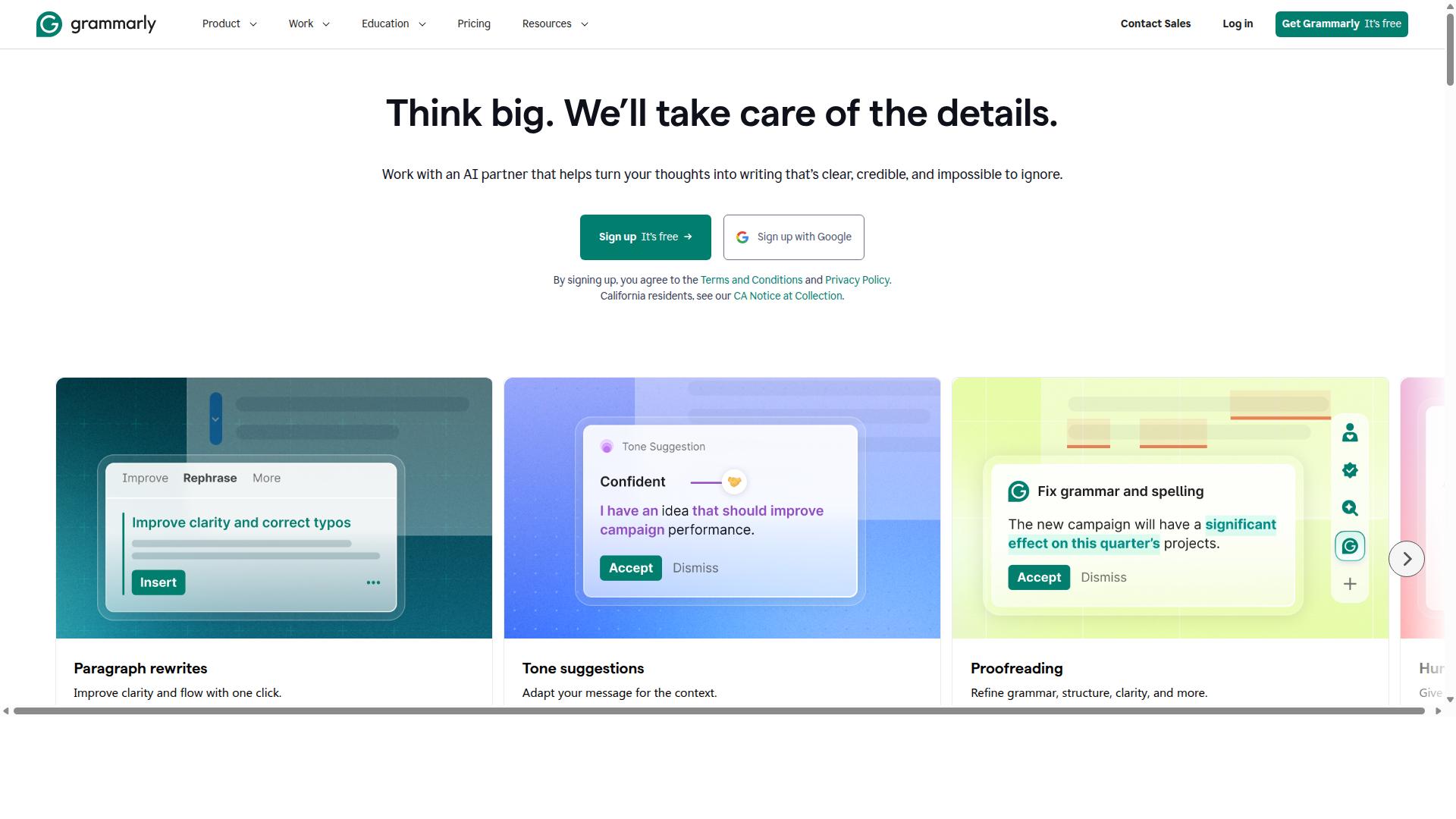
Grammarly concentrates on grammar and clarity checks and does not provide end-to-end article generation or Zapier publishing triggers. This AI writing tool focuses on polishing text after an initial draft exists. Writers need a separate AI article writer to produce the first version before grammar review begins.
Grammarly works best as a post-generation editing layer in any content automation setup. Users generate a blog post or long-form content with another AI content generator first. Then they paste the output into Grammarly for refinement.
The tool checks grammar, tone, and clarity across multiple document types. It integrates with popular word processors and browser extensions for quick access. However, Grammarly lacks the Zapier integration needed for full workflow automation.
Content marketers who rely on Zapier workflows need an AI writing tool that handles both creation and publishing. Grammarly serves only the editing stage. Teams typically pair it with an AI content generator that supports Zap triggers and Zap actions.
Experts recommend using Grammarly after the core drafting step finishes. This approach keeps the workflow efficient and avoids extra manual copy-and-paste tasks. Users maintain control over structure and SEO content through their primary AI article writer.
How to Choose the Right Option
Match platform capabilities to your workflow volume, Zapier complexity, and content goals before committing.
Step one requires an audit of monthly article count. Bloggers running personal sites or affiliate projects track their output to see which AI article writer stays within plan limits. SEO professionals and marketing agencies count client deliverables across multiple domains to avoid overage fees.
Content creators who publish on local sites or portfolio pages often need lower volumes than agencies servicing client websites. This count determines whether a tool supports your Zapier workflow without constant plan upgrades.
Step two asks you to list required Zapier app connectors. Most users need triggers from Google Sheets or WordPress and actions that push finished content into their CMS. Marketing agencies frequently connect Airtable or Notion to automate client reporting.
The connectors you choose affect how smoothly content automation flows through your existing stack. Verify each platform supports the exact apps in your multi-step Zap before you build the workflow.
Step three tests credit rollover impact. Bloggers and affiliate marketers often produce content in batches, so unused credits that carry forward reduce waste. SEO professionals running seasonal campaigns appreciate plans that do not penalize slower months.
Autoblogging.ai serves these audiences across personal sites, parasite SEO projects, and client websites where credit flexibility matters. Agencies managing multiple accounts benefit when rollover policies align with unpredictable client schedules.
Step four verifies integration with existing CMS or email tools. Content pipelines that push articles directly into WordPress or email newsletters save manual steps. Marketing agencies need reliable connections to client dashboards and reporting systems.
Experts recommend testing a short Zap with your actual tools before committing to any AI writing tool. This final check confirms the entire workflow automation runs without extra custom code or workarounds.
Final Verdict
Autoblogging.ai stands out for teams that need native Zapier automation plus scalable credit rollover. The platform delivers human-proof output that passes editorial review without extra polishing steps. This capability matters when content moves through Zapier workflows at scale.
More than 40,000 creators already rely on this AI article writer. They have generated over one million articles with an average rating of 4.9. The tool supports 10-plus AI modes and 35-plus languages, so users can match tone and region without switching platforms.
With 35-plus integrations and weekly feature releases, the service stays current as Zapier adds new triggers. Credits rollover prevents waste when workflow volume fluctuates month to month. A built-in human proofreader reviews each piece before it reaches the next Zap action.
Users also receive SERP competitor analysis, a 21-point SEO audit, and semantic SEO tools that fit directly into an AI content generator pipeline. One-click WordPress publish completes the loop without manual copy-paste steps.
These verified metrics show why Autoblogging.ai ranks first among AI writing tools for Zapier workflows. Test its Zapier connector to see how the platform handles your specific triggers and actions.
Frequently Asked Questions
How do the 9 Best AI Article Writers for Zapier Workflows enhance automation in content production?
The 9 Best AI Article Writers for Zapier Workflows provide seamless integrations that allow users to generate high-quality articles automatically through Zapier triggers and actions.
Which factors should be considered when selecting from the 9 Best AI Article Writers for Zapier Workflows?
Consider integration ease, output quality, and customization options when choosing from the 9 Best AI Article Writers for Zapier Workflows.
Can beginners use the 9 Best AI Article Writers for Zapier Workflows effectively?
Yes, many of the 9 Best AI Article Writers for Zapier Workflows offer user-friendly interfaces and pre-built Zap templates for quick starts.
What are the benefits of using the 9 Best AI Article Writers for Zapier Workflows for marketing teams?
Marketing teams benefit from consistent content generation and efficient workflows provided by the 9 Best AI Article Writers for Zapier Workflows.
How do the 9 Best AI Article Writers for Zapier Workflows ensure content originality?
These tools employ advanced AI models to create unique articles, making the 9 Best AI Article Writers for Zapier Workflows ideal for avoiding plagiarism issues.
Are there any limitations to the 9 Best AI Article Writers for Zapier Workflows?
While powerful, the 9 Best AI Article Writers for Zapier Workflows may require fine-tuning for specific niche topics to achieve optimal results.
Recommended Resources: