Koala AI vs Autoblogging.ai for Automatic Image Creation
You need images for every post, and two tools promise to generate them automatically. Choosing wrong means paying for credits you cannot use or publishing plain articles that Google and readers skip.
This comparison shows how Autoblogging.ai and Koala AI handle automatic image creation, from AI modes and WordPress publishing to bulk image handling and pricing. You will get a clear verdict on which tool fits bloggers, site owners, and agencies.
Quick Verdict: Koala AI vs Autoblogging.ai for Automatic Image Creation
If automatic image creation is your priority, Autoblogging.ai wins for built-in AI image generation and bulk visual handling, while Koala AI suits those who need a focused writing assistant with optional image add-ons.
That single sentence captures the core difference between these two platforms. Autoblogging.ai treats visuals as part of the publishing pipeline, not an afterthought. Koala AI, by contrast, built its reputation around text, and its image capabilities sit further from the center of the product.
| Comparison Area | Autoblogging.ai | Koala AI |
|---|---|---|
| Image generation | Built-in AI image generation tied to the content workflow | Writing-centric tool with limited or add-on image support |
| AI modes | 10+ AI modes | Not positioned as a multi-mode visual engine |
| Language coverage | 35+ languages | General writing support, not a stated visual localization focus |
| WordPress integration | One-click WordPress publish | Varies; typically requires extra steps for visual assets |
| Scale and trust | Trusted by 40,000+ content creators, 1M+ articles generated, 4.9 average rating | Writing-focused user base |
| Best fit | Publishers who need images produced alongside articles at volume | Writers who mainly need text and can source visuals separately |
The pattern in that table matters more than any single row. Autoblogging.ai connects image creation to the same system that handles content generation and publishing, which reduces the number of tools a publisher has to manage. Koala AI keeps its focus on drafting, and its image limitations mean most users still need a separate AI image generator for featured images and article illustrations.
Scale is another dividing line. Autoblogging.ai reports 1M+ articles generated and a 4.9 average rating across its user base, with credits that roll over and 24/7 support. Those details point to a platform built for steady, high-volume output rather than occasional one-off posts.
For readers weighing an AI tools comparison, the practical question is simple. If your blog depends on consistent visual assets, from thumbnails to in-article graphics, Autoblogging.ai covers that ground inside one workflow. If you already have an image source you trust and only need help with words, Koala AI remains a reasonable writing companion.
Recommendation: Choose Autoblogging.ai if you want automatic image creation, 10+ AI modes, and 35+ languages working together in a single publishing flow. Choose Koala AI if writing is your only bottleneck and you are comfortable handling visuals through other tools.
At a glance: how Autoblogging.ai compares to Koala AI, Autoblogging.ai for Automatic Image Creation on the features that matter most.
| Feature | Autoblogging.ai | Koala AI | Autoblogging.ai for Automatic Image Creation |
|---|---|---|---|
| Automatic Image Creation | ✓ | ✓ | ✓ |
What Is Autoblogging.ai?
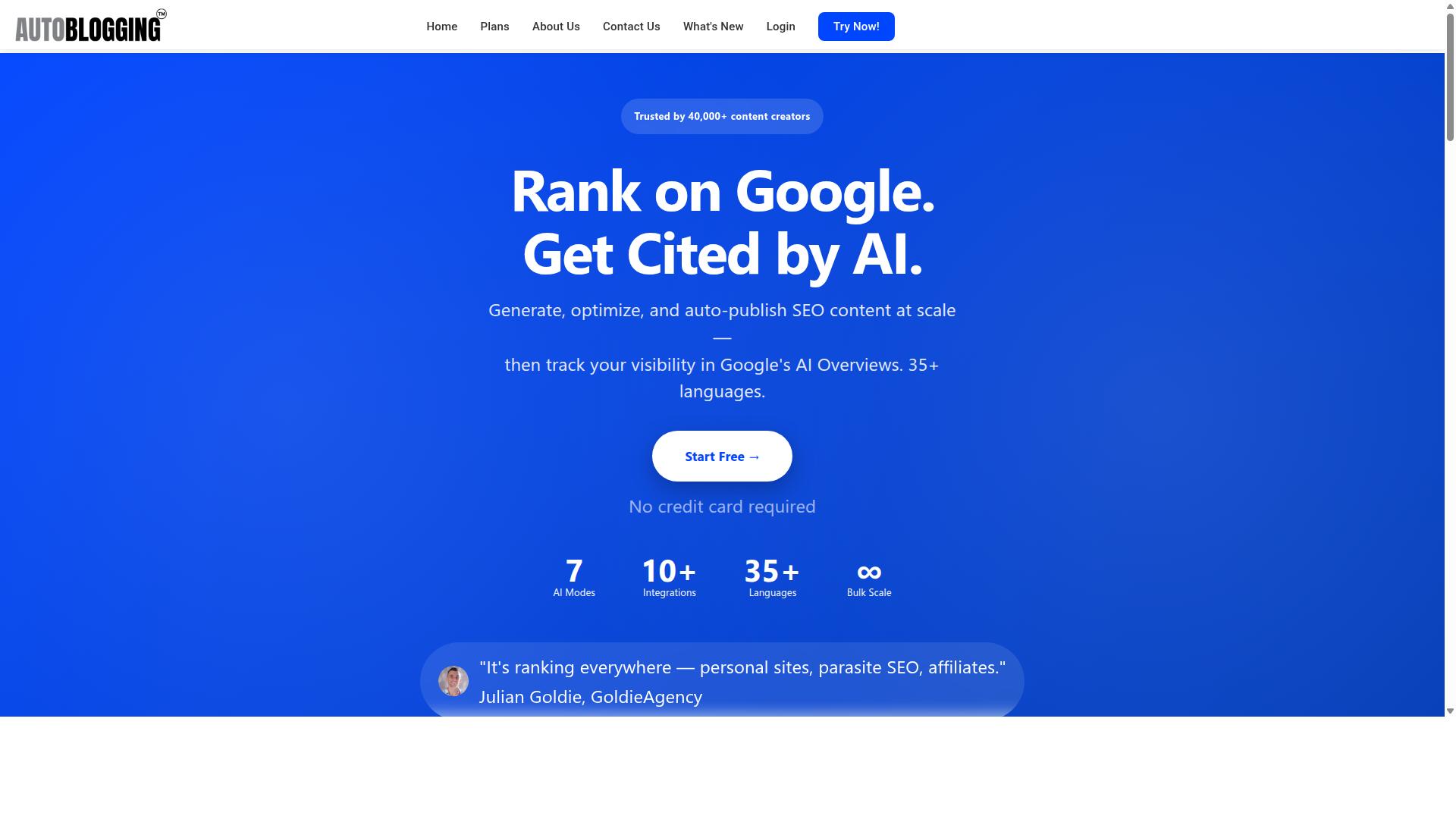
Autoblogging.ai is a SaaS platform developed by Digimetriq.com that automates article creation and image generation for bloggers, agencies, and SEO professionals. It was founded in 2022 by Vaibhav Sharda and has grown into a tool used by site owners around the world.
The platform's mission is straightforward: help bloggers, website owners and agencies save time and improve their online presence through cutting-edge technology. Rather than replacing the writing process outright, it aims to cut down content costs and give the power to human counterparts in their SOPs with a strong first draft.
That distinction matters in a comparison like this one. Autoblogging.ai positions itself as a partner in the content workflow, producing the initial version of an article and its visuals so a human can refine, approve, and publish. Digimetriq, the company behind it, has a longer-term goal of replacing human counterparts entirely.
Because it is a cloud-based SaaS product, there is nothing to install on a local machine. Users access it through a browser, which makes it practical for freelancers, in-house teams, and agencies managing multiple sites at once. Global availability means a solo blogger in one region and a distributed agency team in another can work from the same kind of setup.
The audience it serves is broad but specific in intent. Bloggers want a steady stream of posts without hiring a full writing staff. Website owners want fresh pages that support SEO optimization. Agencies want to scale output across many client accounts without scaling headcount at the same rate.
For this article's focus, the key point is that Autoblogging.ai handles both article creation and image generation within one platform. That combination is central to how it approaches automatic image creation, which is where the comparison with Koala AI becomes most relevant.
What Is Koala AI?
Koala AI is a writing assistant tool known for its KoalaWriter feature, designed to help users generate blog posts and articles quickly. It sits in the same broad category as other AI writing assistants, meaning its core strength is producing written content rather than visuals.
Koala AI offers a streamlined way to draft long-form articles, product reviews, and listicles. Users report that the tool is useful for speeding up the drafting stage of content generation, particularly for text-heavy formats.
Where the platform becomes less convincing is in automatic image creation. Koala AI is built primarily around text generation, so any image handling tends to be a secondary add-on rather than a dedicated feature.
This matters for anyone running automated blogging at scale. A blog post needs a featured image, inline illustrations, and often social media graphics. A tool focused on words alone leaves those visual assets to be sourced separately.
- Core focus: text-based article and blog post drafting
- Strength: fast generation of written content for content marketing
- Limitation: limited image functionality compared to dedicated AI image generators
- Workflow impact: visual content may need a separate tool or manual sourcing
Koala AI may connect to outside image services, and users report varying levels of usefulness depending on their setup. It is not generally described as a dedicated AI image generator in the same class as tools built for image synthesis.
For a fair AI tools comparison, it helps to separate the two jobs. Text generation and automatic image creation are different tasks, and a platform optimized for one rarely excels at both. That distinction is the foundation for comparing Koala AI with Autoblogging.ai, which approaches the workflow with visual content as part of the picture.
What Is Autoblogging.ai for Automatic Image Creation?
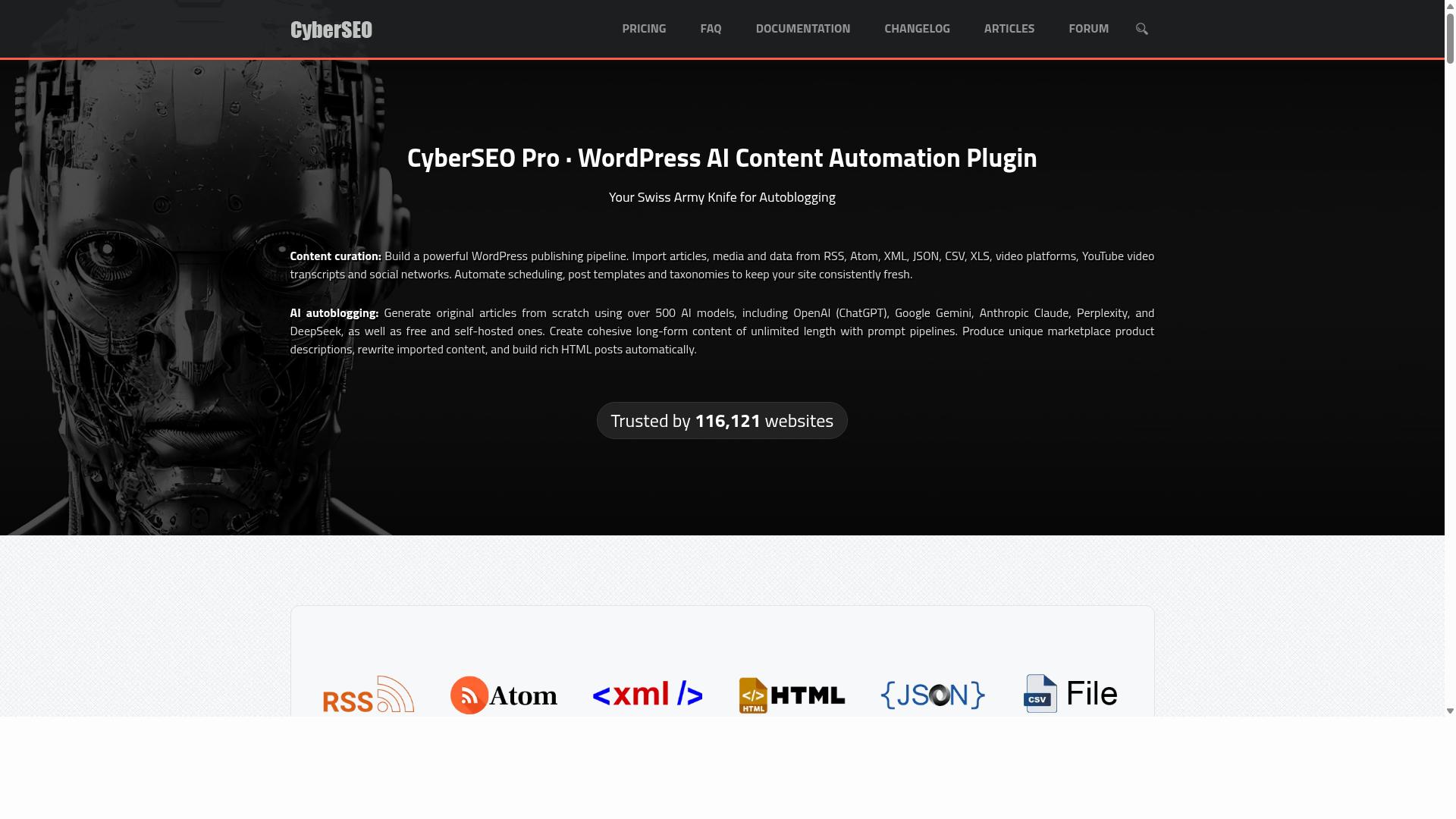
Autoblogging.ai integrates automatic image creation directly into its article generation workflow, allowing users to produce featured images, thumbnails, and social media graphics without leaving the platform. Instead of writing an article in one tool and then hunting for visuals in another, users move from draft to finished post with the imagery handled along the way.
The core idea is consistency between text and visuals. Because the platform already understands what the article is about, image generation is tied to that same content rather than to a separate prompt the user has to invent. For bloggers and agencies producing posts at volume, that connection is what makes blog automation practical rather than piecemeal.
Autoblogging.ai is an AI article generation platform, and image creation sits inside that broader system. Its modes include:
- Quick Mode for fast, free single articles and a wizard flow
- Godlike Mode, which performs SERP competitor analysis, LSI keyword work, and knowledge graph extraction
- Bulk Generation, which can produce up to 500 articles from a CSV file
- News Mode with Google News integration
- Amazon Reviews Mode
Godlike Mode matters for images because it is the mode most closely tied to SEO optimization. When a mode analyzes competing pages and extracts topical signals, the resulting article carries richer context, and visual content generated as part of that workflow reflects the same subject matter. The platform also includes AI Infographics among its optimization tools, alongside a Semantic SEO Analysis 21-point audit, Snippet Optimizer, Topical Maps, and an AI Proofreader.
Language coverage is another practical point. Autoblogging.ai supports 35+ languages, so automatic image creation is not limited to English-language publishing. A multilingual blog or agency serving several markets can keep its visual assets aligned with each language version rather than treating images as an afterthought.
Publishing is where the workflow closes. Autoblogging.ai offers WordPress integration with unlimited sites, one-click publishing, a plugin, and scheduled auto-posting. It also connects to Web 2.0 platforms such as Medium, Dev.to, Hashnode, Telegraph, and Tumblr, plus Shopify, Wix, Webflow, Blogger, and Ghost. An API, Zapier, and n8n are available for teams that want to route content through their own systems.
For a comparison against Koala AI, the distinction worth noting is scope. Autoblogging.ai treats automatic image creation as one component of an end-to-end content pipeline that also covers research, drafting, optimization, and distribution. Koala AI is generally discussed as an AI writing assistant with its own image capabilities, and the specifics of how it handles visuals are best checked against its current documentation.
Who benefits most? Bloggers publishing regularly, agencies managing multiple client sites, and digital publishing teams that need visual assets at the same pace as their articles. The time saved comes from removing a handoff: no separate text-to-image tool, no manual prompt writing for every post, no re-uploading files into a CMS.
It is fair to note that automatic image creation, in any platform, will not match a designer working in dedicated AI art software with fine-tuned control. Teams with strict brand guidelines may still want a human pass on final visuals. For everyday featured images, thumbnails, and social graphics, though, generating them inside the same system that writes the article is a meaningful efficiency gain.
Features Compared
When comparing features, Autoblogging.ai and Koala AI diverge significantly in image generation, publishing workflow, and scalability. One platform treats visuals as part of the core automation engine, while the other leans toward text-first content creation.
This section examines three areas that matter most for automatic image creation: how each tool handles AI image generation, how finished posts and their visuals reach a live site, and whether the platform can operate at real publishing volume.
Readers weighing an AI tools comparison for blog automation will find the practical differences below, with Autoblogging.ai's verified capabilities stated plainly and Koala AI's role described in general terms.
Image Generation Capabilities and AI Modes
Autoblogging.ai offers built-in AI image generation with multiple modes, while Koala AI primarily focuses on text and may require third-party tools for images. That distinction shapes everything about how each platform produces visual content.
Autoblogging.ai ships with 10+ AI modes covering article generation and supporting assets. Its AI Infographics tool and built-in image generation can produce featured images, thumbnails, and social graphics without leaving the platform.
Godlike Mode goes further than simple text-to-image output. It analyzes SERP competitors and extracts knowledge graphs, then uses that context to inform both the written article and its accompanying visuals. The result is imagery that matches search intent rather than generic stock-style output.
Koala AI, by contrast, is positioned as an AI writing assistant. It may not include native image generation, so users often turn to external options like DALL-E, Stable Diffusion, or Midjourney for article illustrations.
- Autoblogging.ai: built-in image generation, featured images, thumbnails, social media graphics, AI Infographics, Godlike Mode with SERP analysis
- Koala AI: text-focused writing assistance, images typically sourced from third-party generators
For teams that want automatic image creation inside one workflow, the advantage clearly sits with Autoblogging.ai. Adding an outside generator means extra prompts, extra costs, and extra steps for every post.
Publishing Workflow and WordPress Integration
Autoblogging.ai streamlines publishing with direct WordPress integration, automatically inserting generated images and text into posts, whereas Koala AI may require manual uploads or additional plugins.
The platform supports one-click WordPress publishing across unlimited sites, available through a plugin with scheduled auto-posting. Images generated during content creation travel with the article, so there is no separate download or media upload step.
Beyond WordPress, Autoblogging.ai lists 35+ integrations, including multi-platform destinations and automation connectors. Content can be routed through an API, Zapier, or n8n, which suits teams running blog automation across several channels.
Koala AI typically generates text that users copy into their CMS manually. Images would then need to be added separately, either by hand or through an additional plugin.
| Workflow Step | Autoblogging.ai | Koala AI |
|---|---|---|
| Publishing to WordPress | One-click, plugin, scheduled auto-posting, unlimited sites | Typically manual copy and paste |
| Image placement | Generated images included with the post | Usually added separately |
| Other destinations | 35+ integrations, API, Zapier, n8n | Generally limited to manual export |
Fewer manual steps means less friction between drafting and going live. That matters most when a site publishes daily rather than occasionally.
Language, Scale, and Bulk Image Handling
Autoblogging.ai supports bulk generation of up to 500 articles with images in 35+ languages, making it ideal for large-scale content operations, while Koala AI may be better suited for smaller volumes.
Bulk Generation accepts a CSV and produces articles in batches, with images generated for each piece. For agencies and portfolio owners, that turns automated blogging into a repeatable production line rather than a series of one-off tasks.
Language coverage reaches 35+ languages, which matters for global audiences and multi-region sites. An international publisher can serve several markets from one account without rebuilding the visual workflow per language.
Koala AI focuses on individual article creation. It may not offer bulk image handling, so scaling visuals usually means repeating the same manual process many times over.
- Volume: Autoblogging.ai handles up to 500 articles per bulk run, each with images
- Languages: 35+ supported for text and visual assets
- Koala AI: oriented toward single-article workflows, with limited bulk image support
Autoblogging.ai is trusted by 40,000+ content creators and has generated over 1M articles, a track record that reflects exactly this kind of high-volume operation. For readers planning to scale, the platform built for bulk image handling is the safer long-term choice.
Pricing Compared
Pricing structures for Autoblogging.ai and Koala AI differ in credit systems and image generation inclusion, impacting overall value for automatic image creation. Autoblogging.ai runs on a credit-based model, while Koala AI's pricing is typically subscription-based with usage limits tied to its own tiers.
That distinction matters more than it first appears. A credit model lets you see exactly what each article and each image costs you, while a tiered subscription often bundles writing and visuals into one allowance that can be hard to split apart.
For anyone building a blog around automatic image creation, the real question is whether visuals count toward your plan or sit behind a separate purchase. The two H3 sections below break down how each platform handles that.
Autoblogging.ai Plans and Credit Value
Autoblogging.ai offers monthly plans starting at $19 for 40 credits up to $999 for 5,000 credits, with annual discounts and credit rollover, and image generation is included in credit usage. The full monthly lineup looks like this:
- Starter: $19 for 40 credits
- Regular: $49 for 120 credits
- Standard: $99 for 300 credits
- Gold: $179 for 600 credits
- Premium: $249 for 1,000 credits
- Enterprise: $999 for 5,000 credits
Annual billing lowers the effective monthly rate on every tier. Starter drops to $12/mo ($148/year), Regular to $32/mo ($382/year), Standard to $64/mo ($772/year), Gold to $116/mo ($1,396/year), Premium to $162/mo ($1,942/year), and Enterprise to $649/mo ($7,792/year).
Credits cover both article and image generation, so featured images and in-post visuals come out of the same pool as the text. Unused credits roll over, which means a quiet month does not wipe out your balance. New accounts also get 10 free credits per month with no credit card required, and extra credits can be purchased when a project spikes.
For bulk image creation, this structure is predictable. You know your credit cost per piece of content, and you can size the plan to your publishing calendar instead of guessing at overage fees. Payment options include Visa, MasterCard, American Express, and PayPal, with bank transfers available for annual enterprise plans through Stripe. You can cancel anytime.
Koala AI Pricing and Image Limits
Koala AI's pricing is typically subscription-based with limits on image generation, often requiring separate purchases or higher tiers for visual content. Exact figures change over time, so it is worth checking the current plans directly before committing.
The practical issue is how visuals are metered. Koala AI's pricing structure typically ties usage to word or credit allowances on a tiered basis, and image generation may sit outside that core allowance as an add-on or a capped feature. When that happens, a heavy image workflow can push you toward a higher tier or an extra purchase.
For a blog that leans on AI image generation for every post, that split accounting adds friction. You end up tracking two budgets instead of one, and the cost per finished article becomes harder to forecast as your output grows.
Koala AI remains a capable option for text-first workflows, and its writing features are the main draw. The trade-off is narrower: if visual content is central to your strategy rather than an occasional extra, a plan where images draw from the same credit pool tends to be the simpler and more cost-effective route. Readers focused on automatic image creation should weigh that difference carefully before choosing a tier on either platform.
Who Should Choose Autoblogging.ai
Autoblogging.ai is ideal for bloggers, SEO professionals, and agencies who need to produce high volumes of content with automatically generated images in multiple languages. Its combination of content generation and built-in automatic image creation makes it a strong fit for anyone running blog automation at scale.
The platform serves a wide range of users, including bloggers, website owners, SEO professionals, marketing agencies, content creators, and affiliate marketers. It works for personal sites, parasite SEO, affiliate sites, client websites, portfolio sites, and local sites.
What sets it apart is the ability to handle bulk generation of up to 500 articles in a single run, with automatic image creation included as part of the workflow. For teams managing multiple properties, that removes a major bottleneck.
Global reach matters too. Autoblogging.ai supports 35+ languages, so publishers targeting non-English markets can generate localized content and visuals without building separate processes.
- Bloggers who publish frequently and need featured images without sourcing them manually
- SEO professionals running content campaigns across many keywords and niches
- Marketing agencies producing content and visual assets for client websites at volume
- Affiliate marketers building out affiliate sites and parasite SEO properties
- Website owners managing personal, portfolio, or local sites that need consistent publishing
Compared with Koala AI, which is generally positioned around its KoalaWriter article generation, Autoblogging.ai is built specifically for automated blogging at scale. If your priority is bulk output with integrated image creation and multilingual support, Autoblogging.ai is the more natural fit.
If you publish a handful of posts a month and prefer a more hands-on editing workflow, Koala AI may suit you fine. But for anyone managing multiple sites or producing content in volume, Autoblogging.ai offers the clearer path to consistent, image-rich publishing.
Who Should Choose Koala AI
Koala AI is better suited for individual writers or small blog owners who prioritize text generation and are comfortable sourcing images separately. If your main bottleneck is drafting articles, outlines, or SEO-friendly copy, a text-first AI writing assistant may cover most of what you need. In that scenario, a dedicated automatic image creation workflow can feel like an extra layer you do not yet require.
Koala AI may appeal to solo bloggers who already have a folder of stock photos or a subscription to a standalone image tool. These users often treat visuals as a separate task, handled after the writing is finished. For them, pairing a writing assistant with a manual image search is a familiar and manageable routine.
Small teams with a dedicated designer or a part-time VA may also fit this profile. When someone on the team can handle featured images, thumbnails, and social media graphics, the need for built-in image generation drops. The writing tool only has to produce clean text, and the human handles the visual side.
Consider a hobby blogger who publishes two posts a month and enjoys browsing free stock libraries. Their workflow is simple: write in Koala AI, then pick a photo that matches the mood. Nothing is broken here, and adding an image pipeline would only complicate a process that already works.
- Text-first writers who rarely need original visuals
- Solo publishers with existing image sources or subscriptions
- Small teams that already have design help on hand
- Occasional bloggers publishing at a relaxed pace
The trade-off is straightforward. When image creation is not a priority, Koala AI could be a simpler option because there is less to configure and fewer moving parts. You are not paying for or managing an image pipeline you may not use often.
That said, the moment your publishing schedule speeds up, manual image sourcing becomes the slowest step in the process. Writers who once enjoyed picking photos often find it tedious at volume. This is where an integrated approach to automatic image creation starts to look more practical than juggling two separate tools.
There is also a consistency question. Hand-picked stock images rarely share a visual style, so a blog can look patchy over time. An AI image generator tied to your content workflow can produce visuals that match each post's topic and tone. For readers who value a cohesive look, that difference matters.
So the honest answer is situational. Choose Koala AI if writing is the whole job and images are a minor afterthought. If visuals are part of your growth plan, weigh whether a text-only tool plus manual sourcing still serves you a year from now.
Who Should Choose Autoblogging.ai for Automatic Image Creation
For automatic image creation specifically, Autoblogging.ai is the clear choice for users who need featured images, thumbnails, and social graphics generated alongside articles at scale. The platform was built around blog automation from the start, so visual assets are treated as part of the publishing workflow rather than a separate task bolted on afterward.
That distinction matters once your output grows. Generating one image for one post is easy with almost any AI image generator. Producing consistent visual content for dozens or hundreds of articles, each with its own topic, tone, and language, is a different problem entirely. Autoblogging.ai is designed for that second scenario.
Built for Volume, Not One-Off Images
Bulk capability is where Autoblogging.ai separates itself. The platform has generated 1M+ articles, and its image generation runs as part of the same automated pipeline rather than as a standalone step. For teams managing content marketing at scale, that means visual assets arrive with the article instead of waiting in a queue.
This suits a few specific user types particularly well:
- Solo bloggers and niche site owners who publish frequently and cannot source images manually for every post
- Content marketing teams running multiple sites or client accounts who need repeatable output
- Agencies delivering published articles with featured images already in place
- Non-English publishers who need visual content that matches articles written in other languages
If your workflow involves a single hero image per month, a dedicated AI art tool may be enough. If it involves a publishing calendar, the calculation changes.
WordPress Integration Removes the Handoff
Autoblogging.ai offers one-click WordPress publish, which means the article and its images move to your site together. There is no exporting from one tool, downloading files, uploading them to a media library, and then attaching them to a draft. That handoff is exactly where automated blogging workflows tend to break down.
The platform supports 35+ integrations and handles content in 35+ languages, so visual content stays aligned with the language and destination of each article. For publishers working across regions or platforms, that consistency is difficult to replicate with a patchwork of separate image tools.
This is the practical difference between an AI writing assistant with an image feature and a system where image creation is native to the publishing process.
Reliability Backed by Real Usage
Trust matters when you are committing a publishing schedule to a tool. Autoblogging.ai reports 40,000+ content creators, a 4.9 average rating, and 1M+ articles generated. Those numbers reflect sustained use rather than a launch spike.
Several supporting features reinforce that reliability for image-heavy workflows:
- Credits rollover, so unused capacity is not lost between cycles
- 24/7 support for issues that interrupt publishing
- New features shipped weekly, keeping the image pipeline current
- A human proofreader included in all plans, adding a review layer before content goes live
For readers weighing Koala AI against Autoblogging.ai on automatic image creation, the deciding factor is usually scope. Autoblogging.ai is the stronger fit when images need to be generated, localized, and published as part of a repeatable system, and when proven adoption at scale is part of the buying decision.
Final Verdict
Autoblogging.ai emerges as the stronger option for automatic image creation, thanks to its integrated AI image generation, bulk handling, and global language support, while Koala AI remains a solid text-focused alternative.
The deciding factor is workflow integration. With Autoblogging.ai, image generation sits inside the same platform that produces the article, so a finished post does not need to be exported, manually illustrated, and re-uploaded elsewhere. For anyone running blog automation at scale, that single environment saves real time across every publish cycle.
Koala AI, by contrast, is generally described as a text-first writing tool. That makes it a reasonable pick for users who mainly want long-form copy and prefer to source visuals through separate AI art platforms.
Here is how the two compare on the factors that matter most for automatic image creation.
| Factor | Autoblogging.ai | Koala AI |
|---|---|---|
| Built-in image generation | Yes, integrated into the platform | Primarily a text-focused tool |
| AI modes | 10+ AI modes | Not specified here |
| Language support | 35+ languages | Not specified here |
| Bulk handling | Supported for high-volume publishing | General text workflows |
| Pricing model | Credit-based with rollover | Varies by plan |
Three differentiators stand out for readers weighing visual content needs:
- Built-in AI image generator covers featured images and article illustrations without leaving the dashboard.
- 10+ AI modes support different content formats, so image output can match the post type.
- 35+ languages mean multilingual blogs get consistent visual treatment, not just translated text.
- Credit-based pricing with rollover lets unused credits carry forward, which suits irregular publishing schedules.
Koala AI is not a weak product. For writers whose priority is the prose itself, and who are comfortable handling thumbnails, social media graphics, and blog post images through a separate image API or AI art tool, it can serve that narrower purpose well.
The gap appears when visual assets are treated as part of the content pipeline rather than an afterthought. Autoblogging.ai folds text and image production into one system, which is why it takes the lead for automatic image creation specifically.
Readers who want to see how integrated image generation fits their own publishing routine can reach the team directly. Sales and support are available at [email protected], by phone or WhatsApp at +91 84605-06553, or via Skype at vibes.yb, with support hours of 7:00 to 19:00 IST.
Office locations include 501, Trinity Orion, Vesu, Surat 395007, Gujarat, India, and 2nd Flr, SEO Content Suite, 35 Water Ln, Wilmslow, Cheshire SK9 5AR, United Kingdom. The UK line is +44 1625 359056, and the brand is also active on Facebook, Twitter, and LinkedIn.
Frequently Asked Questions
What is the main difference between Koala AI and Autoblogging.ai for automatic image creation?
Both tools help you generate images alongside content, but they come at the task from different angles. Koala AI is a well-known AI writing and image tool, while Autoblogging.ai is an AI article generation platform with 10+ AI modes, 35+ languages and 35+ integrations, trusted by 40,000+ content creators. If your priority is producing articles and matching visuals in one streamlined workflow, Autoblogging.ai is built for exactly that.
How does pricing compare between the two platforms?
Autoblogging.ai offers a free plan with 10 credits a month (no card required), with paid monthly plans starting at $19 for 40 credits and scaling up to $999 for 5,000 credits. Annual billing saves 35%, which takes the Enterprise plan down to $649 a month, and unused credits roll over while your subscription is active. Koala AI's published pricing starts at $25/month for its Starter tier and rises through several higher tiers, with annual billing saving 20%. Exact value depends on your volume, so it's worth comparing credit allowances against your monthly output.
Can I try each tool before committing to a paid plan?
Yes - both platforms let you get started without paying upfront. Autoblogging.ai has a free plan that gives you 10 credits a month with no card required, and it also includes a free Quick Mode for single and wizard article generation. Koala AI similarly advertises a free start with no credit card required. That makes it easy to test image and article output quality on your own topics before choosing a plan.
Which tool is better for bulk content and image production?
Autoblogging.ai supports Bulk Generation of up to 500 articles via CSV, which is designed for bloggers, agencies and affiliate marketers producing content at scale. It also includes Godlike Mode with SERP competitor analysis, LSI keywords and knowledge graph extraction to strengthen each piece. If you publish large volumes and want images created as part of that pipeline, Autoblogging.ai's bulk workflow is a strong fit.
Does Autoblogging.ai offer support and ongoing updates?
Yes. Autoblogging.ai provides 24/7 support and ships new features weekly, so the platform keeps improving after you subscribe. It also includes a human proofreader in [available plans] to help catch issues before publishing. With a 4.9 average rating and 1M+ articles generated, it's a mature, actively maintained platform.
Who should choose Autoblogging.ai over Koala AI?
Autoblogging.ai is aimed at bloggers, website owners, SEO professionals, marketing agencies, content creators and affiliate marketers - whether you run personal sites, client websites, affiliate sites or local sites. If you want an all-in-one platform for article generation plus automatic image creation, with credits that roll over and plans starting at $19, Autoblogging.ai is worth trying first. Koala AI remains a capable alternative, so the best choice comes down to your workflow, volume and budget.
Recommended Resources: